
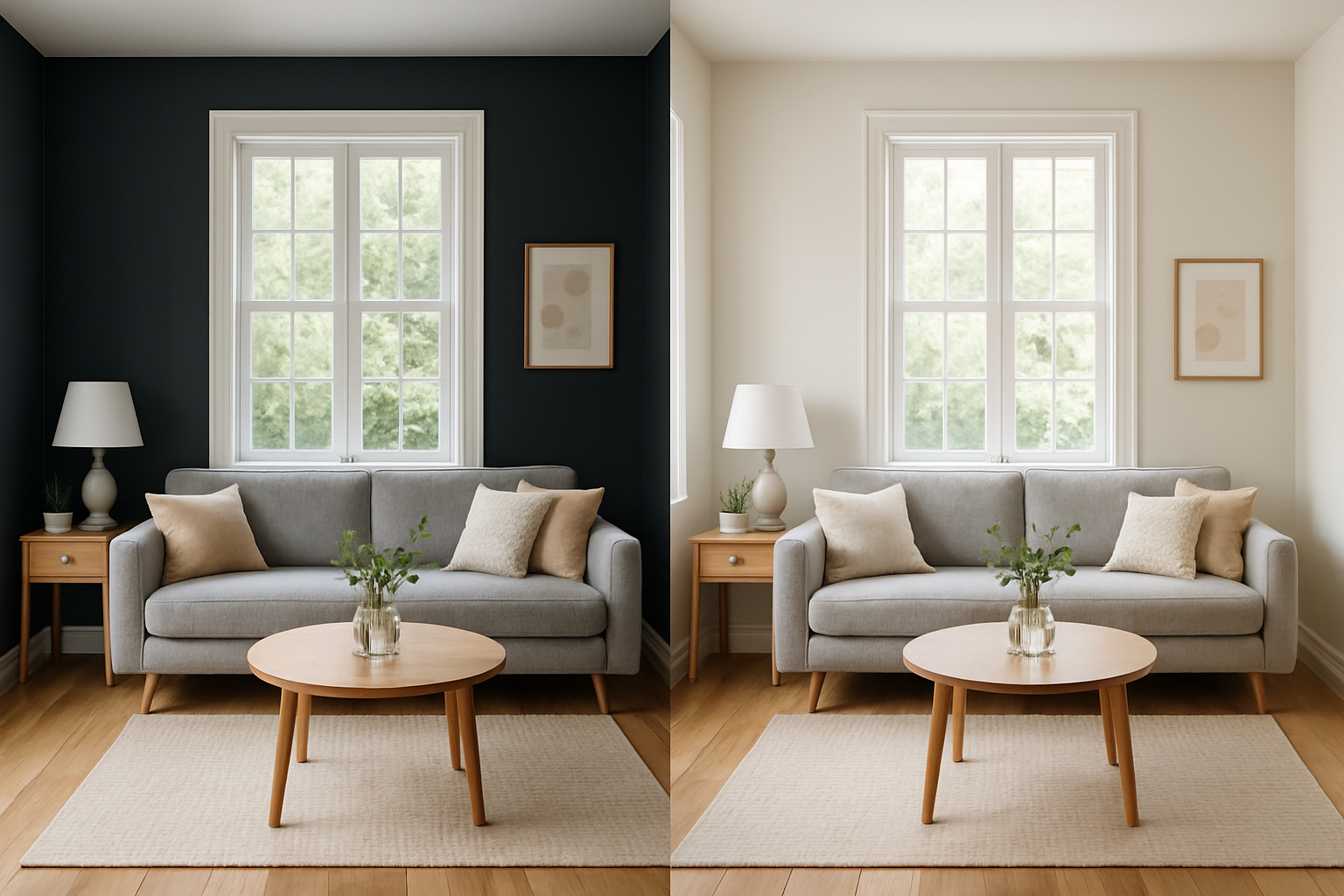
Certain paint colors create the optical illusion of more space by reflecting light and softening visual boundaries. Therefore, soft whites, pale blues, warm grays, and light greens are consistently recommended by interior designers for small or narrow rooms. These paint colors that make room look bigger work by engaging the eye differently than darker shades.
Table of Contents
- Why Color Affects How Big a Room Feels
- The Best Paint Colors That Make Room Look Bigger
- How to Apply Paint Colors That Make Room Look Bigger
- Things to Know
- Boost the Effect with Smart Painting Techniques
Why Color Affects How Big a Room Feels
Color perception connects directly to how our eyes process light. Light colors reflect more of the available light in a space. As a result, this reduces the contrast between walls, ceiling, and floor. That reduced contrast blurs visual boundaries and makes the room feel less boxed in.
Dark colors do the opposite. They absorb light and pull walls visually inward, which can feel cozy in a large room but suffocating in a tight one. This is not a matter of personal taste alone. Rather, it is a documented principle of how human vision works. According to Ferguson Home, both hue and value (the lightness or darkness of a color) directly influence the perceived size of a space.
A 2024 study by the American Society of Interior Designers (ASID) found that 62% of interior designers report increasing requests for nature-inspired color palettes in home projects. Furthermore, these often involve exploring accent wall colors living room options that align with an interest in airy, light-reflective tones that also support a sense of spaciousness.
The Best Paint Colors That Make Room Look Bigger
Not every light color performs the same way. Here is how the most effective options compare:
| Color Family | Why It Works | Best Room |
|---|---|---|
| Soft White / Off-White | Maximizes light reflection, neutral backdrop | Any room, especially small bedrooms |
| Pale Blue / Sky Blue | Recedes visually, feels open and airy | Bathrooms, coastal-style living rooms |
| Warm Greige | Adds warmth without heaviness | Living rooms, entryways |
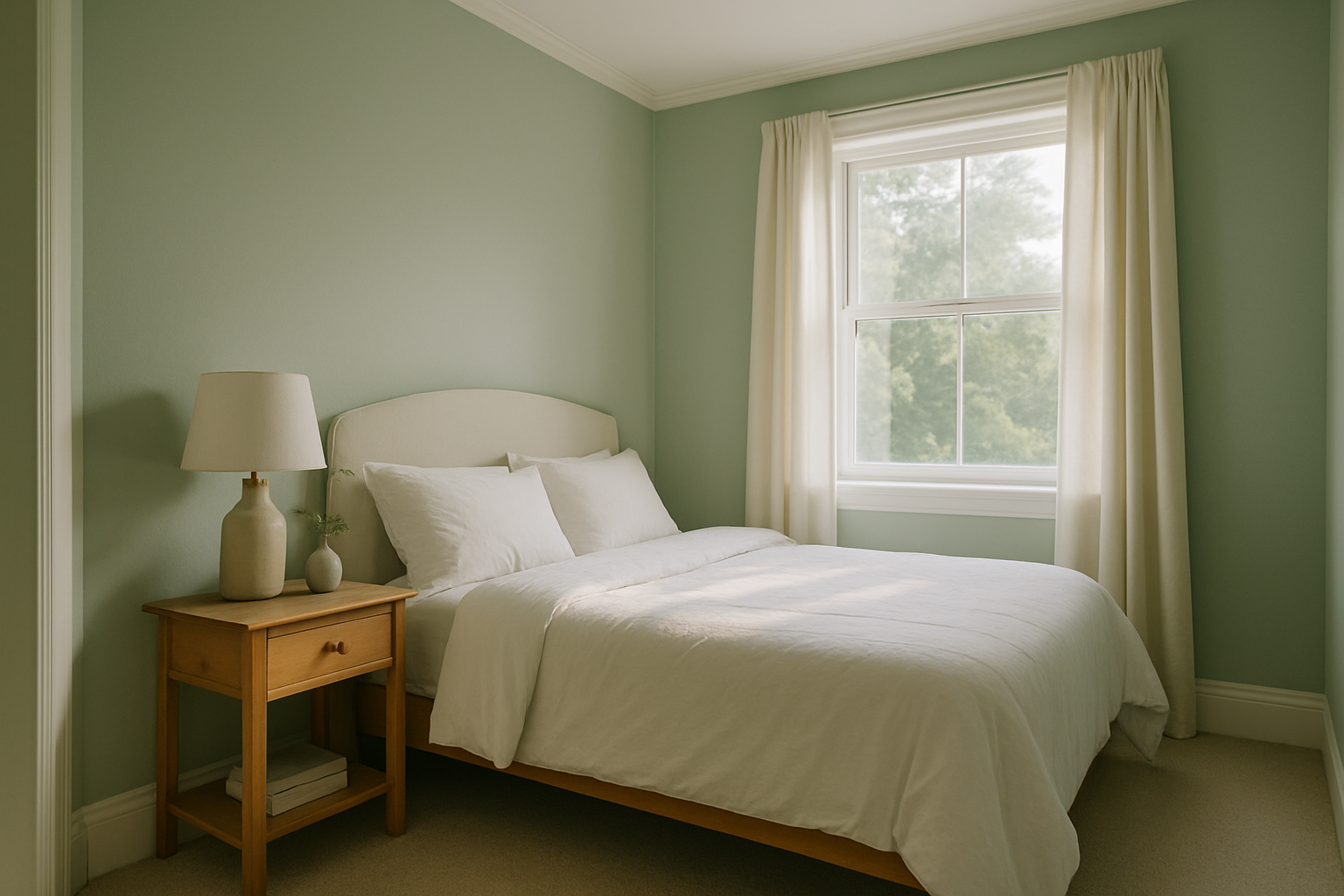
| Pale Sage Green | Nature-inspired, calm, light-reflecting | Bedrooms, offices |
| Light Lavender | Soft and receding, works well with natural light | Bedrooms, reading nooks |
Pale blue deserves a special mention. According to a 1stDibs Designer Trends Survey (2024), light blue, sky blue, and robin’s-egg blue shades rose in designer preference from 14% to 19% over a couple of years. That kind of growth reflects real-world demand, and much of it ties to how open these tones feel in compact spaces.
For whites specifically, meaningful differences exist between undertones. When evaluating the best white paint colors for walls, a white with a cool blue undertone reads differently than one with a warm cream base. Moreover, the finish matters too: eggshell and satin reflect more light than flat finishes, adding to the spacious effect.
How to Apply Paint Colors That Make Room Look Bigger
Choosing the right color is only half the work. Additionally, where and how you apply it matters just as much.
Paint the ceiling the same color as your walls. This removes the visual “lid” effect that a contrasting ceiling creates. Benjamin Moore designers specifically recommend this approach for low-ceiling rooms. They note that continuity of color draws the eye upward rather than stopping it at the ceiling line.
Use monochromatic schemes. When walls, trim, and ceiling are all in the same color family, there is less visual choppiness. The room reads as one unified space rather than a series of borders.
Be intentional with accent walls. An accent wall can work in a small room if you handle the color correctly. You should explore options that stay within a similar value range to your main wall color rather than creating heavy contrast.
Consider your ceiling texture. A popcorn ceiling can visually lower a room and break up light. In addition, if you’re working with one, it may be worth learning how to remove popcorn ceiling before you paint, since a smooth surface reflects light more evenly.
Complement with wallpaper choices. In some cases, a light-toned pattern can add depth without darkening a space. For example, subtle vertical stripe patterns make ceilings feel taller when you explore peel and stick wallpaper ideas if you want to test this effect without a full commitment.
Things to Know
- Sheen matters as much as color. Semi-gloss and satin finishes reflect more light than flat paint, amplifying the spacious effect.
- Warm-toned whites can make a north-facing room feel brighter than a stark cool white, which can sometimes read as gray in low light.
- Keep trim and baseboards the same light color as walls rather than bright white contrast. This further blurs visual edges and opens the space.
- Natural light levels shift throughout the day. Therefore, always test a large paint sample on the wall before committing to a full coat.
Boost the Effect with Smart Painting Techniques
Request a Free Color Consultation from Our Team
At Fairfield Painting Contractors, we work with homeowners across Fairfield, CT and the surrounding coastline every day to solve exactly this kind of challenge. Our full-time, year-round crew can walk you through color selection, sheen options, and ceiling treatments that make your space feel noticeably larger without a renovation. Reach out today and let us put together a free estimate for your project.
Frequently Asked Questions
Q: Do all light colors make a room look bigger?
Light colors generally help, but undertone and sheen both affect the result.
A pale yellow with a warm undertone can feel cheerful but visually active. Meanwhile, a cool-toned light gray tends to recede more cleanly. Test large swatches in your specific room before deciding.
Q: Can dark colors ever make a small room feel larger?
In specific situations, yes, but it requires a deliberate approach.
Painting all four walls and the ceiling the same deep tone can create an enveloping effect that feels expansive rather than cramped. This works best in rooms with strong, controlled lighting.
Q: What finish should I use on walls in a small room?
Eggshell or satin finishes are the most practical choice for small spaces.
They reflect enough light to brighten the room without the high-glare look of semi-gloss. Additionally, they are easier to clean than flat paint.
Q: Should the ceiling be lighter or darker than the walls?
Lighter ceilings are the traditional rule, but matching ceiling to wall color works equally well.
A ceiling painted the same soft tone as the walls completes the unified effect that makes spaces feel open and airy.