
One gallon of paint typically covers 350 to 400 square feet of wall space, according to This Old House (2026). Before you buy paint, understanding how much paint do I need saves money, prevents mid-project store runs, and keeps your finish consistent across every wall.
Table of Contents
- The Basic Formula for Calculating How Much Paint You Need
- How Surface Type Changes How Much Paint You’ll Use
- Interior vs. Exterior: How Much Paint for Each
- Things to Know
- Plan Your Project with Fairfield Painting Contractors
The Basic Formula for Calculating How Much Paint You Need
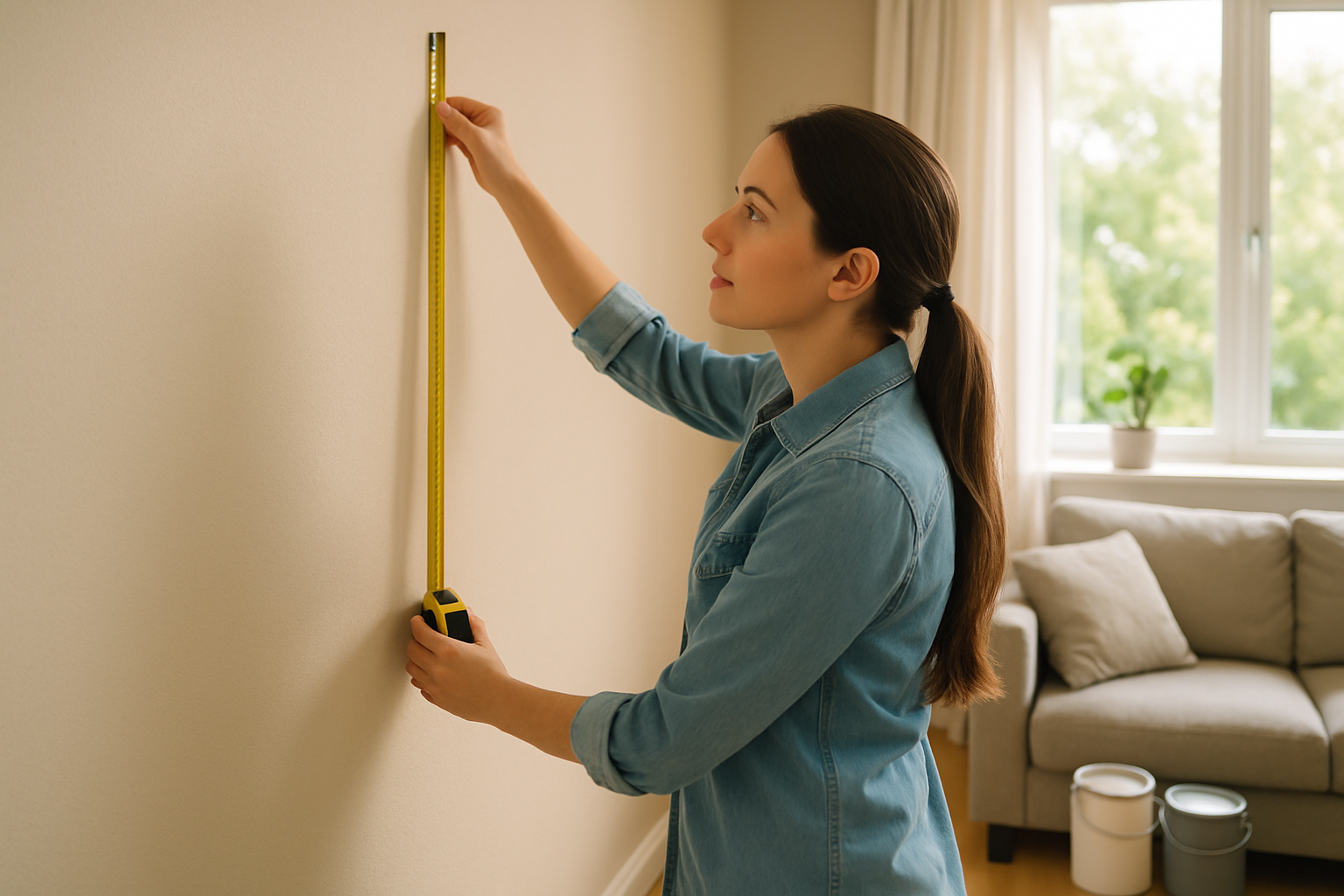
Before you head to the hardware store, gather three key measurements. First, measure the perimeter of the room. Second, note the ceiling height. Third, calculate the total square footage of doors and windows you plan to skip.
Here is the step-by-step process:
- Measure the perimeter. Add up the length of all four walls.
- Multiply by ceiling height. This gives you total wall square footage.
- Subtract openings. Each standard door is roughly 20 square feet; each window runs around 15 square feet.
- Divide by coverage rate. Use 350 square feet per gallon as a conservative baseline, per This Old House (2026).
- Multiply by coats. Most projects need two coats, so double your gallon count.
Quick Example:
| Room Detail | Measurement |
|---|---|
| Perimeter | 52 linear feet |
| Ceiling Height | 9 feet |
| Gross Wall Area | 468 sq ft |
| Minus 2 doors + 2 windows | -70 sq ft |
| Net Paintable Area | 398 sq ft |
| Gallons Needed (1 coat) | ~1.1 gallons |
| Gallons Needed (2 coats) | ~2.3 gallons |
Round up to 3 gallons to keep a small reserve for touch-ups. Additionally, buying paint from the same batch, called a “lot number,” prevents subtle color variation between cans. Many first-timers overlook this detail.
Do not forget primer. A gallon of primer covers roughly 200 to 300 square feet, according to This Old House (2026). Therefore, a 400-square-foot room typically needs at least two gallons of primer before any finish coat goes on.
How Surface Type Changes How Much Paint You’ll Use
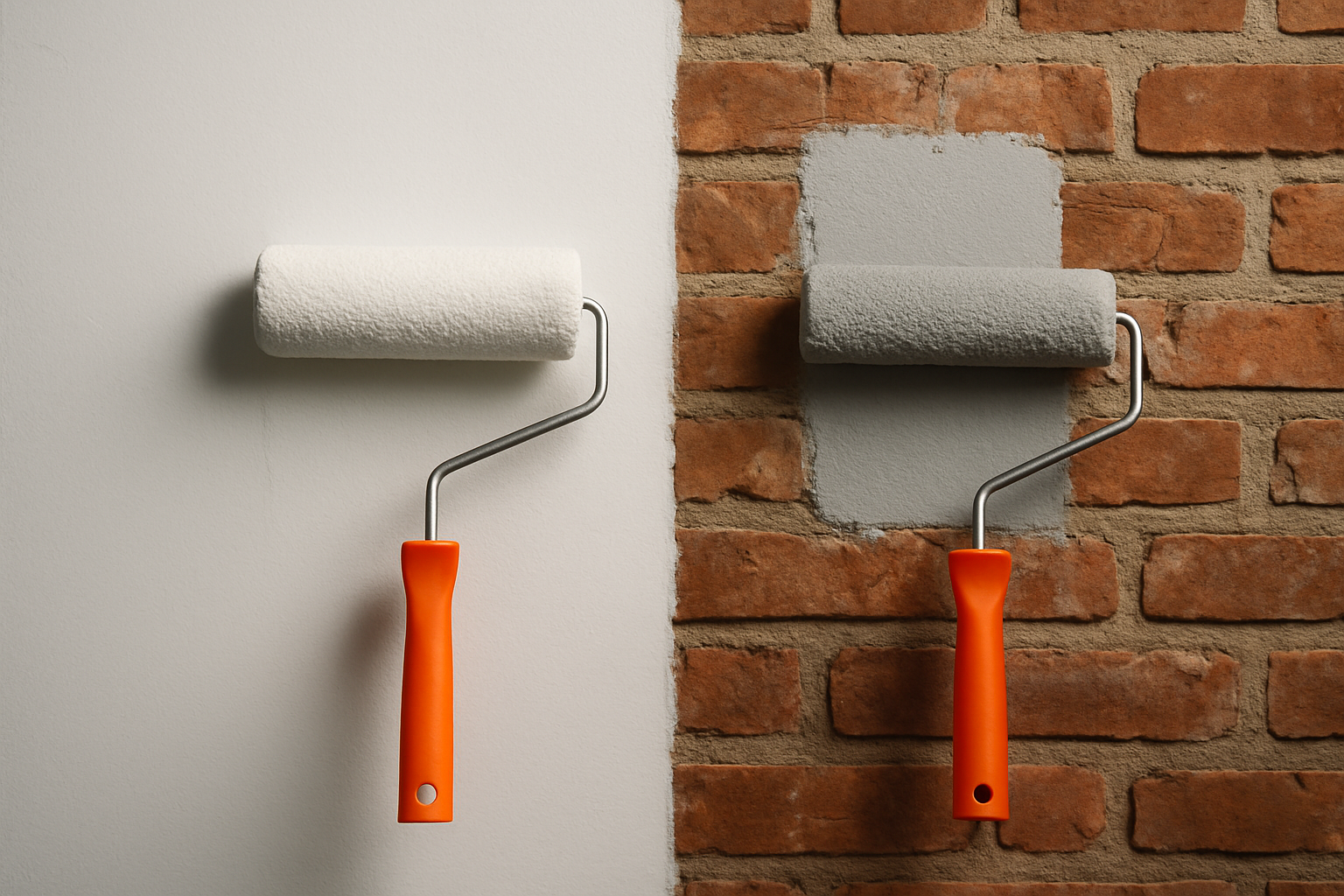
Coverage rates vary by surface. Smooth, previously painted drywall absorbs very little product. You stay close to the 350 to 400 square-foot standard. In contrast, rough or porous surfaces pull in considerably more paint and push your actual coverage down.
Surfaces that consume more paint:
- Bare wood siding (especially cedar or redwood)
- Brick and masonry
- Textured ceilings (popcorn, orange peel)
- New drywall or patching compound
Surfaces that consume less:
- Previously painted, smooth interior walls in good condition
- Primed metal surfaces
- Cabinets that have been properly sanded and primed
For textured ceilings, plan on reducing your expected coverage by 15 to 20 percent. For bare wood exteriors, some painters reduce expected coverage by up to 25 to 30 percent. Moreover, they always recommend a penetrating primer coat first.
Color also matters significantly. Switching from a dark color to a lighter one requires extra coats. Similarly, going from light to dark demands additional coverage. When making a dramatic color change, tint your primer to match the finish coat. This approach cuts the number of finish coats needed from three down to two.
Interior vs. Exterior: How Much Paint for Each
Interior and exterior paint projects follow the same core formula. However, exterior square footage calculations have extra layers of complexity.
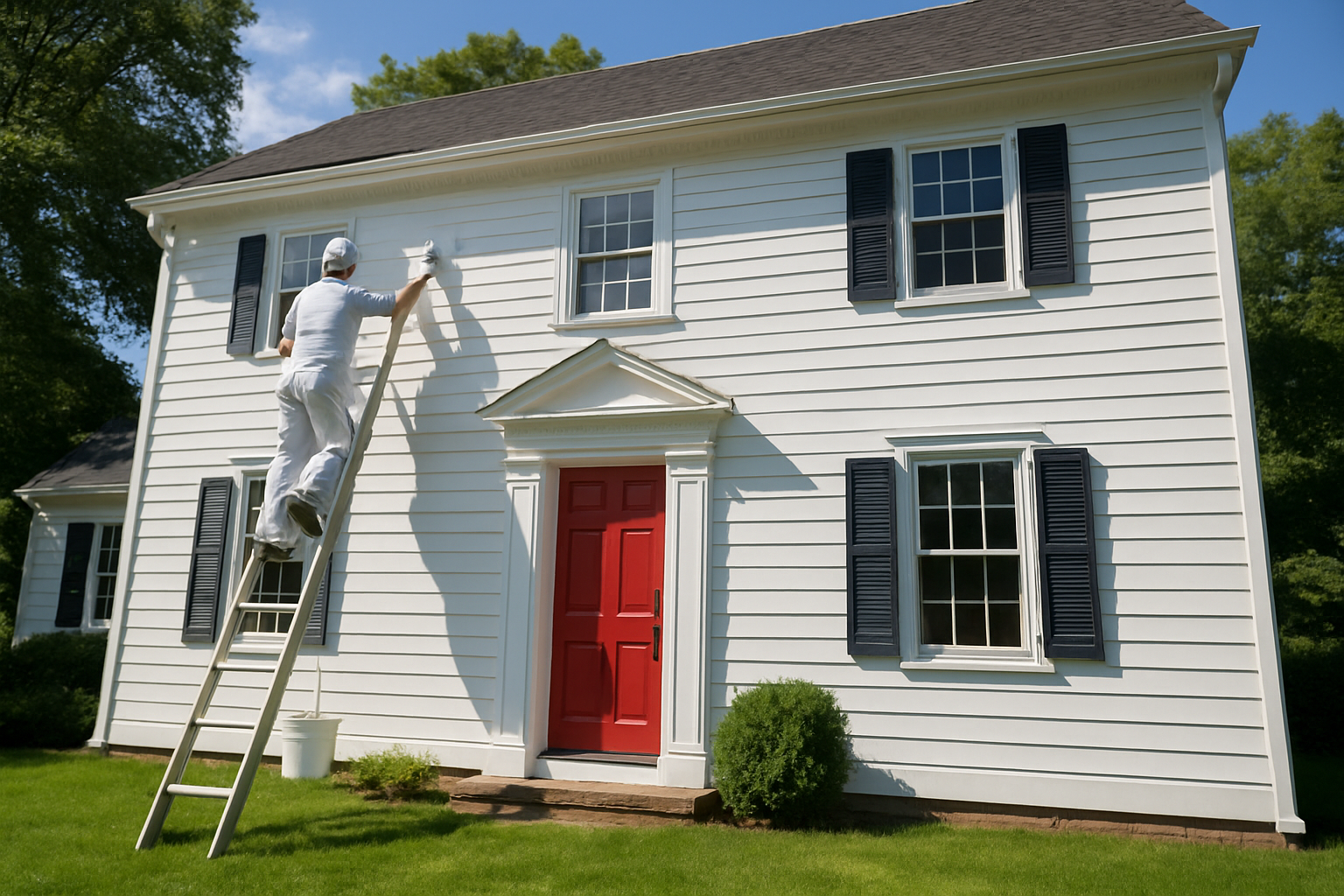
For an exterior paint job, calculate the total surface area of each wall face. Then subtract windows, doors, garage doors, and any trim you plan to paint a different color. Most standard single-story homes in the 1,500 to 2,000 square-foot range require 12 to 15 gallons of finish paint for two coats. That number shifts quickly with dormers, covered porches, and architectural details.
If you are budgeting a full exterior project, reviewing cost to paint the exterior of a house in fairfield ct gives you a realistic picture. Material and labor costs together drive the final project price.
Paint type drives quantity differences as well. Exterior paints are thicker and more weather-resistant. As a result, they can slightly reduce spread rate compared to interior formulas. Always check the label on the specific product you select. Premium exterior paints and budget options can differ by 50 or more square feet per gallon.
The U.S. paint and coatings industry produced an estimated 798 million gallons in 2024. This represents a 2.9 percent increase from 2023, according to the American Coatings Association (2024). That volume reflects a market increasingly skewed toward professionals. According to HIRI (2026), the professional painting segment grew 6.3 percent in 2025, reaching roughly $14.6 billion. The consumer segment contracted. Understanding diy vs professional painting what fairfield homeowners need to know helps you make the right choice. Professional painters buy in volume, understand product yield, and waste far less than a typical DIYer.
Things to Know
- Sheen level does not change coverage. Flat, eggshell, satin, and semi-gloss all cover roughly the same square footage per gallon. Sheen affects durability and appearance, not volume.
- Buy a little extra, but not too much. Most retailers will not accept opened cans. Aim for a 10 percent buffer rather than a 30 percent one.
- Keep a quart for touch-ups. After the project, transfer leftover paint into a quart-size container. Label it with the room and color code. Store it in a climate-controlled space.
- Lot numbers matter. If you buy additional cans mid-project, mismatched lot numbers can produce visible color shifts. This happens even in the same product line.
- Hiring a pro affects your estimate. Before signing any contract, knowing what to ask a painter in fairfield ct helps you confirm whether the quoted price includes paint or expects you to supply it.
Plan Your Project with Fairfield Painting Contractors
Getting paint quantities right is the kind of detail that separates a smooth project from a frustrating one. Fairfield Painting Contractors is a locally operated, licensed and insured residential painting company. We serve Fairfield, CT and the surrounding coastline. We understand what fairfield homeowners should expect from an exterior painting contractor.
Our full-time, year-round crew handles interior painting, exterior painting, cabinet refinishing, deck painting, and more. We use no subcontracted seasonal labor.
We calculate paint quantities as part of every estimate. Therefore, you never get stuck mid-project or pay for gallons you do not need. We hold ourselves to exactly those standards on every job.
Ready to stop guessing and start planning? Request a free estimate today and let our team handle the math, the materials, and the results from start to finish.
Frequently Asked Questions
Q: How many gallons of paint do I need for a 12×12 room?
A standard 12×12 room with 8-foot ceilings typically requires about 2 gallons of paint for two coats. That accounts for roughly 320 square feet of paintable wall area after subtracting a door and a window. Always buy a small buffer in case of touch-ups or uneven absorption on older walls.
Q: Do I need to buy separate primer, and does it count toward my paint total?
Yes, primer is a separate product. Do not count it in your finish coat total. Primer seals the surface, improves adhesion, and often cuts the number of finish coats required. A gallon covers roughly 200 to 300 square feet, so calculate it independently from your finish paint.
Q: Can I use leftover paint from a previous project to reduce how much I buy?
You can, but only if the paint is in good condition and matches your current project’s lot number. Paint stored improperly can develop a skin, separate, or grow mold. Stir it thoroughly and test a small patch. If the texture or color looks off, it is safer to buy fresh paint.
Q: Does paint color affect how much paint I need?
Yes, significant color changes almost always require an extra coat, which increases your total gallon count. Going from dark to light or light to dark is the most demanding scenario. Tinting your primer to approximate the finish color is a reliable way to reduce the number of finish coats from three to two.
Q: How do I calculate paint for ceilings separately from walls?
Measure the length times the width of the room to get ceiling square footage. Then divide by 350 to find the gallons needed. Ceilings often use a separate product, typically flat white ceiling paint. Textured ceilings absorb more product, so reduce your expected coverage by 15 to 20 percent and plan for an extra half gallon.