
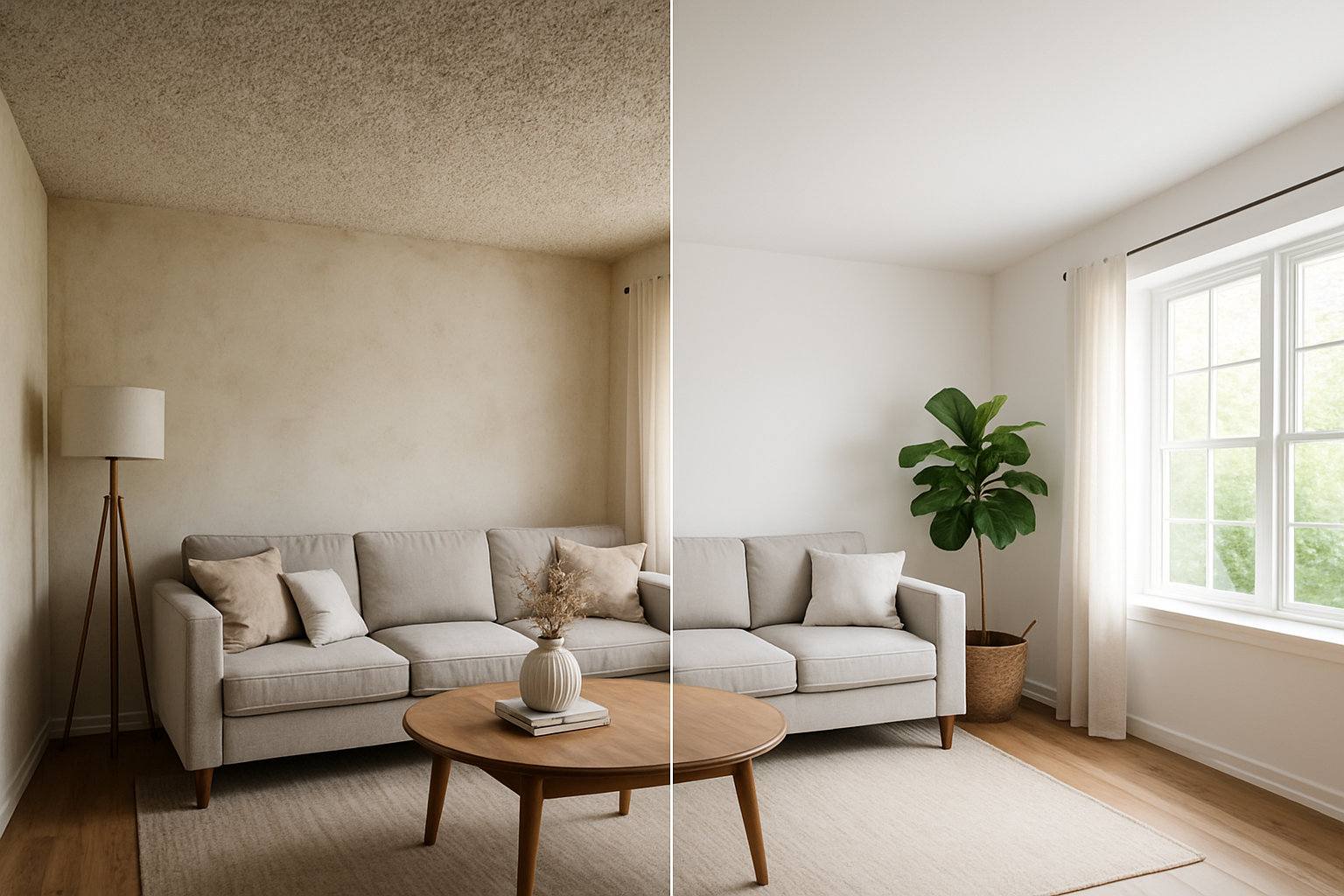
Popcorn ceiling removal is a manageable DIY project in most homes built after 1980. However, it requires careful preparation, the right tools, and a clear understanding of what’s hiding in that texture. Additionally, if your home was built before 1978, testing for asbestos before you touch the ceiling is not optional—it’s a safety necessity. Learning how to remove popcorn ceiling properly protects both your health and your home’s value.
Key Takeaways
- Homes built before 1978 may contain asbestos in popcorn ceiling texture; always test before proceeding.
- The removal process involves wetting the texture, scraping, and refinishing—it’s messy but doable.
- Painted-over popcorn ceilings are significantly harder to remove and may require a different approach.
- Proper plastic sheeting and drop cloths protect your floors and walls during the project.
- If the ceiling has been painted, is very high, or contains asbestos, hiring a professional is the safer and often more cost-effective choice.
- Local contractors can handle removal as part of a broader ceiling painting or texturing project.
Table of Contents
- Why Popcorn Ceilings Were Used in the First Place
- The Asbestos Question You Cannot Skip
- What You Need Before You Start
- Step-by-Step Guide: How to Remove Popcorn Ceiling
- When Painted Popcorn Makes Removal Harder
- Things to Know About Popcorn Removal
- Hire a Pro or Remove Popcorn Ceiling Yourself
Why Popcorn Ceilings Were Used in the First Place
Popcorn texture, also called acoustic or cottage cheese ceiling, became popular in American homes from the 1950s through the late 1980s. Builders loved it because it was fast to apply. Moreover, it required no sanding or finishing skills. The texture also muffled sound between floors. Additionally, it masked imperfections in the drywall underneath, which saved time and money on finishing labor.
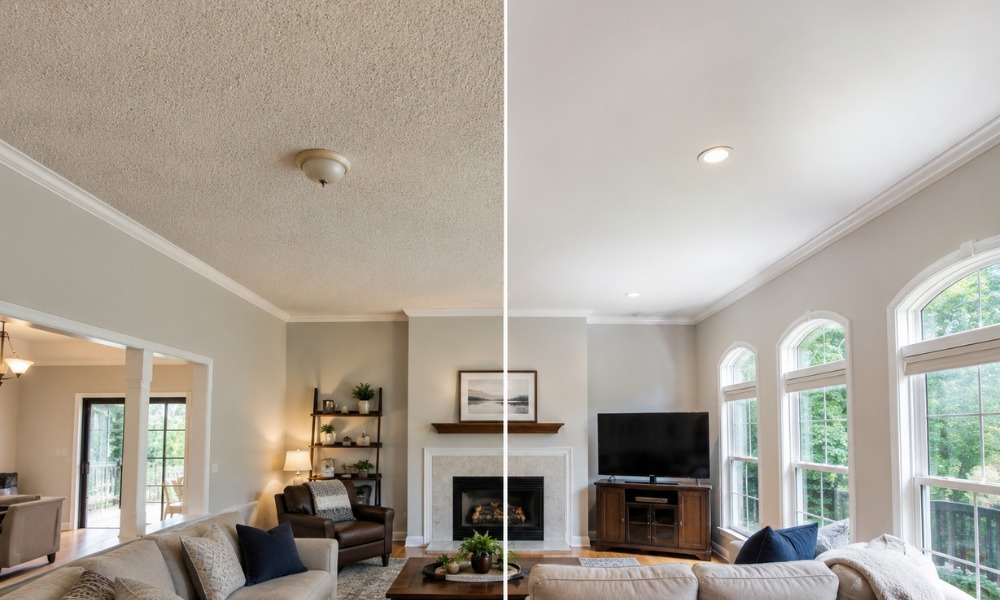
Today, most homeowners want them gone. Popcorn ceilings collect dust and cobwebs easily. Furthermore, they look dated in updated interiors. In addition, they are notoriously difficult to touch up or repaint cleanly. Removing the texture and replacing it with a smooth or lightly skimmed surface modernizes a room significantly.
The Asbestos Question You Cannot Skip
This is the most important section in this article, so read it carefully. The U.S. Environmental Protection Agency (EPA) and the Consumer Product Safety Commission have long established that asbestos was commonly used in building materials, including ceiling texture products, up through the late 1970s. Therefore, if your home was built before 1980, there is a real possibility that your popcorn ceiling contains asbestos fibers.
Disturbing asbestos-containing material releases fibers into the air. These fibers can cause serious lung diseases including mesothelioma. Before you wet a single inch of your ceiling, collect a small sample. Then send it to an accredited asbestos testing lab. The EPA recommends using a certified inspector for this step. Many local health departments can refer you to certified labs. Home test kits are widely available for around $30 to $50, with lab analysis included.
If the test comes back positive, stop immediately. Do not attempt to remove the ceiling yourself. You will need to hire a licensed asbestos abatement contractor. This is a regulated process under federal and Connecticut state law. Attempting it without proper credentials and containment equipment is both dangerous and illegal.
What You Need Before You Start
Assuming the ceiling has tested negative for asbestos, here’s what you need to gather before starting:
- Plastic sheeting (6 mil): Cover every inch of your floors and tape the plastic up the walls at least 12 inches.
- Painter’s tape: Secure the plastic and protect trim lines.
- Garden sprayer or pump sprayer: For applying water to the texture.
- Wide drywall knife or ceiling scraper: A 6-inch or wider blade works best.
- Drop cloths: Layer these over the plastic for additional protection.
- Safety goggles and dust mask (N95 minimum): Even without asbestos, ceiling texture debris is irritating.
- Mud pan and joint compound: For patching after scraping.
- Primer and ceiling paint: For finishing.
Remove all furniture from the room or cover it completely. Furthermore, turn off HVAC systems before you start to prevent dust from circulating through your home.
Step-by-Step Guide: How to Remove Popcorn Ceiling
Here is the process broken down into clear stages:
1. Test for asbestos first (see above). No exceptions.
2. Protect the room. Lay plastic sheeting across the floor and tape it to the walls. Remove light fixtures if possible. Alternatively, cover them tightly.
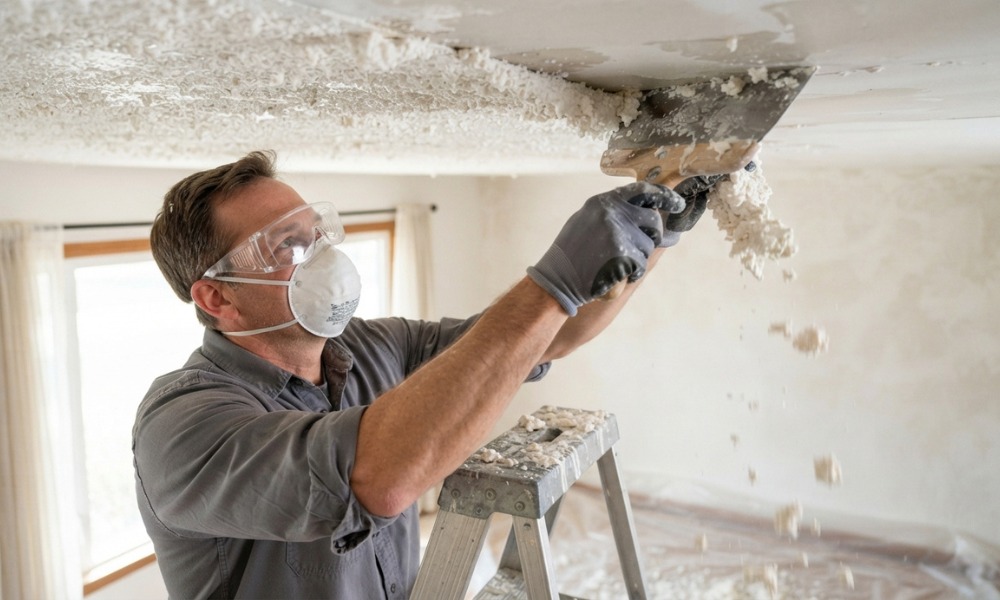
3. Wet the texture. Fill your pump sprayer with warm water. Lightly mist a small section of the ceiling—about 4 to 5 square feet at a time. Let it soak for 15 to 20 minutes. Do not oversaturate. Too much water can damage the drywall underneath.
4. Scrape. Hold your wide scraper at a low angle to the ceiling. Push the texture off in smooth strokes. Work in sections. The texture should come off in soft clumps when properly saturated.
5. Patch and skim. Once you remove the texture, you will almost certainly find dings, gouges, and seam lines. Apply a thin skim coat of joint compound. Let it dry completely. Sand the surface smooth. Repeat as needed.
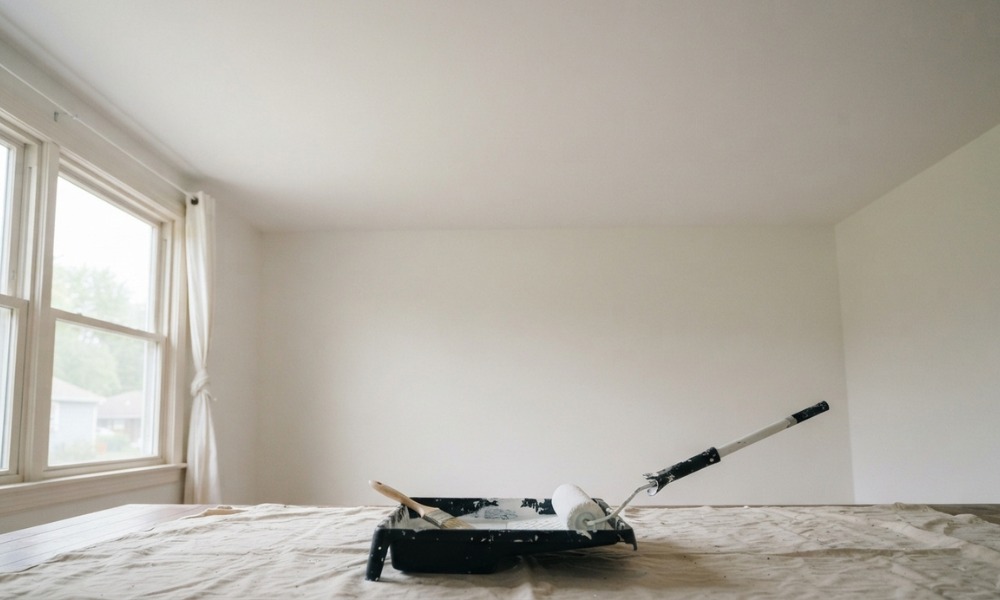
6. Prime and paint. Use a drywall primer before applying ceiling paint. Skipping the primer step results in uneven sheen and poor adhesion.
When Painted Popcorn Makes Removal Harder
If a previous owner painted over the popcorn ceiling, water will not penetrate the surface as easily. The paint acts as a barrier, blocking the moisture that loosens the texture. In these cases, you have several options.
First, score the ceiling lightly before wetting it. Second, use a longer soak time to allow water to seep through. Third, consider covering the ceiling instead of removing it. New drywall panels or a skim coat applied directly over the texture can work. However, these methods add weight and require professional execution.
Understanding when a project has exceeded DIY scope is part of being a smart homeowner. Reading up on diy vs professional painting what fairfield homeowners need to know can help you assess your specific situation before committing to either path.
Things to Know About Popcorn Removal
- Wet scraping is far less dusty than dry scraping. However, it still creates mess. Budget for a full day of cleanup.
- If your ceiling has more than one layer of texture, expect the job to take significantly longer.
- Ceiling drywall is thinner and more fragile than wall drywall. Aggressive scraping can punch through it, requiring patching or panel replacement.
- The skim coat and finishing phase is often where DIYers hit their limit. Uneven surfaces and lap marks show up once the paint goes on.
- Some municipalities have specific disposal rules for construction debris. Check with your local waste management service before bagging and tossing the scraped material.
Hire a Pro or Remove Popcorn Ceiling Yourself?
| Situation | Recommended Approach |
|---|---|
| Ceiling under 9 ft, no paint, no asbestos | DIY is reasonable |
| Ceiling painted over | Professional recommended |
| Pre-1980 home, untested ceiling | Test first, hire if positive |
| Large square footage | Professional saves time and finish quality |
| Damaged drywall underneath | Professional for skim coat and repair |
For homeowners in Fairfield County, working with a contractor who handles ceiling painting and texturing alongside removal is worth considering. Before you hire anyone, knowing what to ask a painter in fairfield ct will help you separate experienced professionals from anyone cutting corners.
Start Your Ceiling Upgrade the Right Way
Ready to finally get that popcorn ceiling taken care of? Fairfield Painting Contractors is a locally operated, licensed and insured residential painting company serving Fairfield, CT and the surrounding coastline. When evaluating potential contractors, understanding what fairfield homeowners should expect from an exterior painting contractor provides valuable benchmarks for interior ceiling work as well. Their full-time, year-round crew handles ceiling painting, texturing, drywall repair, and full interior painting projects, with no subcontracted seasonal labor.
Contact Fairfield Painting Contractors today to schedule a consultation and get a clear estimate for your ceiling project.
Frequently Asked Questions
Q: Do I need a permit to remove popcorn ceiling in Connecticut?
In most cases, no permit is required for cosmetic ceiling work in Connecticut. However, if the work involves asbestos abatement, that process is regulated under Connecticut DEEP guidelines. It must be performed by a licensed contractor. Always check with your local building department if you are unsure.
Q: How long does popcorn ceiling removal take for an average room?
A standard bedroom can take four to eight hours for scraping alone. This does not include drying, patching, and painting. Larger rooms, high ceilings, and painted-over texture all extend the timeline. Plan for two to three days if you are doing the full process from scraping to final paint coat.
Q: What happens if I damage the drywall while scraping?
Gouges and tears in the drywall are common. They can be repaired with joint compound and mesh tape. Deeper damage may require cutting out a section and patching in new drywall. If the damage is widespread, a skim coat applied over the whole ceiling by a professional produces the most even result.
Q: Can I skim coat directly over popcorn ceiling instead of removing it?
Yes, but it requires skill and adds weight to the ceiling. This may not be suitable in all homes. A thin skim coat can be applied over existing texture. However, the surface must be primed and the applicator needs experience. This is typically a job for a professional.
Q: How much does it cost to hire a professional for popcorn ceiling removal in Connecticut?
Costs vary based on square footage, ceiling height, and whether asbestos is present. For general painting and ceiling work pricing in the Fairfield area, reviewing the cost to paint the exterior of a house in fairfield ct page gives useful context on how local contractors structure their pricing. Get at least two written estimates before committing.
The Bottom Line on How to Remove Popcorn Ceiling
Knowing how to remove popcorn ceiling comes down to preparation, patience, and honest assessment of your ceiling’s condition and your own skill level. Asbestos testing is non-negotiable in older homes. Furthermore, the finishing work after scraping is where most DIY projects stall. If you are in Fairfield, CT and want to ensure your contractor meets professional standards, reaching out to Fairfield Painting Contractors is a solid resource to start with. Get an honest estimate. Make your decision based on your actual ceiling, not a best-case scenario.