
Table of Contents
- What Actually Determines Lifespan
- How Long Does Exterior Paint Last by Surface Type
- Climate and Region Matter More Than You Think
- Professional vs. DIY Exterior Paint Jobs
- Warning Signs Your Exterior Paint Is Failing
- Things to Know
Key Takeaways
- A quality exterior paint job lasts 7 to 10 years under good conditions, but many homes need a refresh at the 5 to 7 year mark.
- Surface type is a major variable: painted brick can last up to 15 years, while wood siding may need repainting in as little as 5 years.
- High-UV and coastal climates accelerate paint degradation significantly.
- Professional surface prep, primer selection, and application method directly affect how long the paint holds up.
- Early warning signs like peeling, chalking, or fading indicate your home needs attention before damage spreads.
- Choosing the right paint colors for home resale value can also affect long-term value if you’re planning to sell.
What Actually Determines Lifespan
Paint doesn’t fail randomly. Specific conditions either protect or break down the coating over time. Understanding them helps you make smarter decisions about when and how to repaint.
Surface preparation is the single biggest factor. Paint applied over dirty, damp, or poorly primed surfaces will fail much faster regardless of how premium the product is. A thorough prep process includes pressure washing, scraping loose paint, sanding rough areas, and applying the right primer for the substrate.
Paint quality plays a direct role as well. Additionally, 100% acrylic latex formulas from established brands (Sherwin-Williams, Benjamin Moore, Behr) consistently outperform budget options in adhesion, flexibility, and UV resistance. According to Home Shield Coating, top-rated exterior paints for 2026 prioritize mildew resistance and elasticity to handle temperature swings.
Number of coats matters significantly. A single thin coat over bare wood or worn paint won’t achieve the same film thickness as two full coats over a proper primer. Film thickness directly affects how long a paint job resists cracking and water infiltration.
How Long Does Exterior Paint Last by Surface Type
Different exterior materials wear at different rates. Therefore, your painting schedule should reflect those differences. According to data compiled by Today’s Homeowner, here’s a realistic breakdown:
| Surface Type | Expected Paint Lifespan |
|---|---|
| Wood siding | 5 to 7 years |
| Stucco | 6 to 10 years |
| Fiber cement (e.g., Hardie Board) | 8 to 12 years |
| Painted brick | 8 to 15 years |
| Aluminum siding | 5 to 10 years |
Wood is the most demanding surface because it expands and contracts with moisture and temperature changes. As a result, paint cracks and peels faster on wood. Brick, by contrast, holds paint well once properly primed, though painting over it is a long-term commitment since removal is labor-intensive.
Climate and Region Matter More Than You Think
Where you live shapes how hard your exterior paint has to work. Homes in high-UV regions like the Southwest or along coastal areas face serious challenges. Salt air accelerates oxidation and peeling significantly. CertaPro reports that homes in these climates often need repainting closer to the 5 to 7 year mark. In contrast, homes in milder climates with lower humidity and limited direct sun exposure can exceed 10 years with the same quality of paint and prep work.
For homeowners in Fairfield, CT and along the Connecticut shoreline, coastal exposure presents a real concern. Salt air, freeze-thaw cycles, and humid summers all stress exterior paint more than conditions inland. Fairfield Painting Contractors works year-round in these exact conditions. They factor climate variables into every surface prep and product selection decision.
If you’re researching what’s happening inside your home while planning exterior work, you might also find the interior paint color trends 2026 useful for a full refresh.
Professional vs. DIY Exterior Paint Jobs
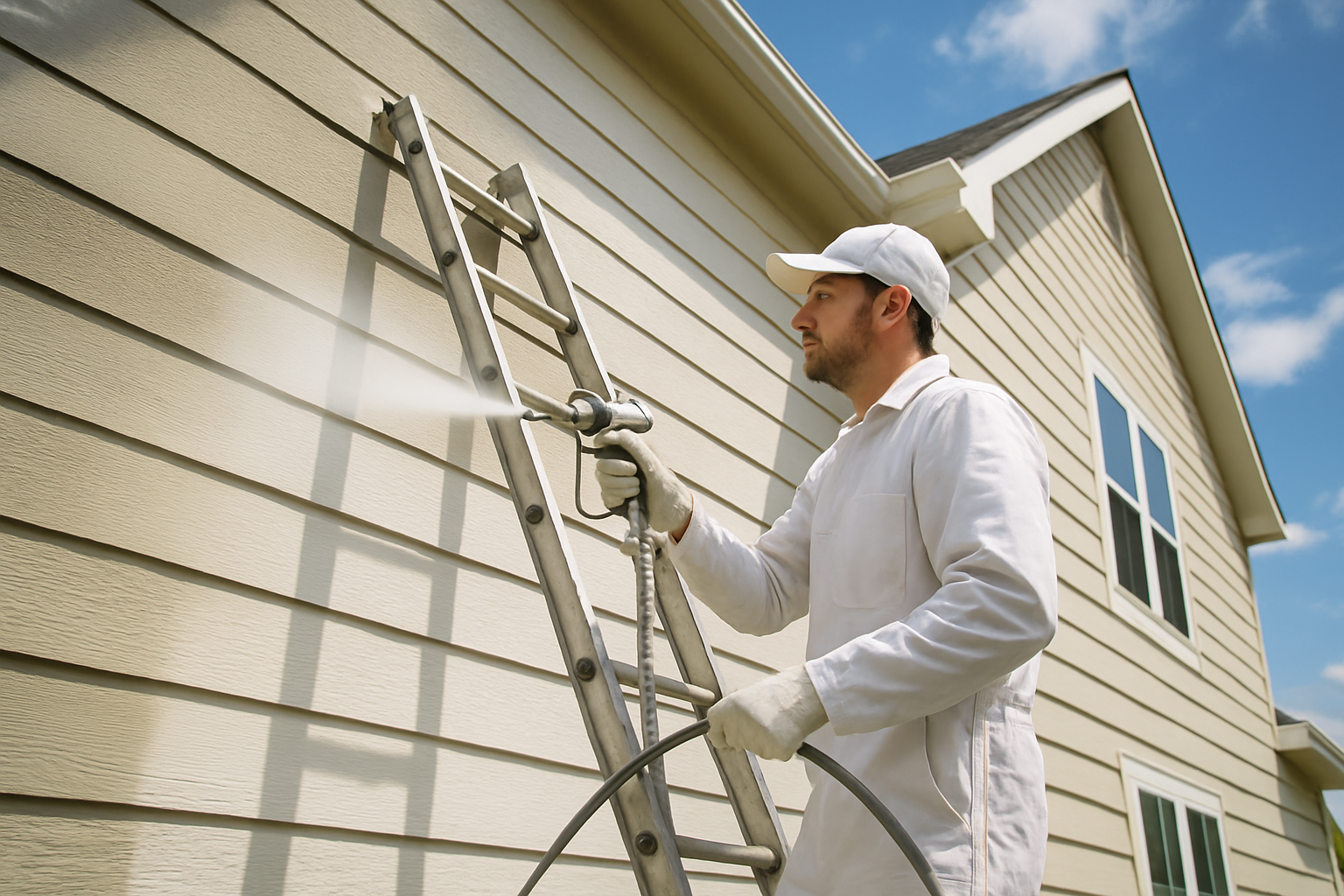
The difference in longevity between professional and DIY exterior paint jobs is significant. Without professional surface preparation, high-grade primers, and commercial spray equipment, most DIY jobs last only 3 to 5 years. As a result, they require touch-up or full recoat according to industry data cited by Vander Kolk Painting.
Professional painters bring several advantages:
- Commercial-grade pressure washing and proper drying time before application
- Access to contractor-grade paint products not always available at retail
- Spray, brush, and roller techniques matched to specific surfaces
- Warranty-backed work with accountability for adhesion failure
Rhino Shield’s internal polling found that regular paint typically lasts 5 to 12 years. However, 5 to 7 years is the most common timeframe reported by homeowners across various regions. That range reflects real-world variation based on the factors described above.
When comparing costs for other projects like a kitchen cabinet painting cost estimate, it helps to evaluate whether DIY savings are worth the shorter durability. The added prep labor on exterior surfaces deserves careful consideration.
Additionally, if your home has older ceilings being addressed during renovation, review popcorn ceiling asbestos testing before any interior work begins alongside your exterior project.
Warning Signs Your Exterior Paint Is Failing
Don’t wait for visible wood rot or moisture damage before acting. These are the most common signals that your exterior paint has reached the end of its useful life:
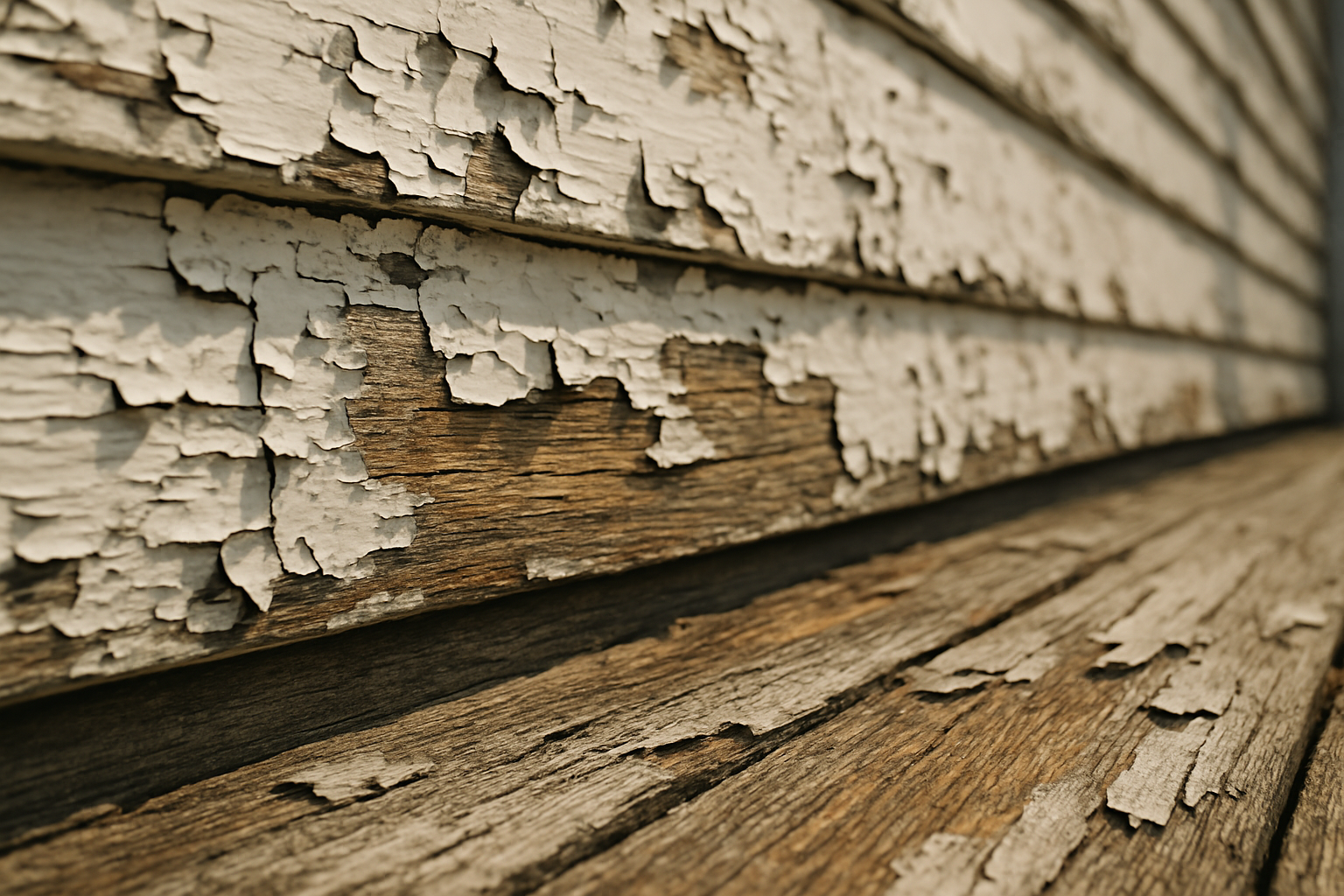
- Peeling or flaking: Paint is losing adhesion, often due to moisture intrusion beneath the film.
- Chalking: A powdery residue on the surface indicates UV breakdown of the paint binder.
- Fading: Significant color loss beyond typical aging suggests the pigment and UV inhibitors are depleted.
- Cracking or alligatoring: Surface cracking that resembles reptile skin means the paint film is no longer flexible.
- Mold or mildew growth: Dark staining that reappears after cleaning signals moisture problems the current paint is no longer sealing out.
Catching these early means a repaint rather than a full repair. Moreover, left too long, moisture damage requires wood replacement before painting, which adds significant cost.
Things to Know
- Paint applied in temperatures below 50°F or above 90°F can fail prematurely, regardless of product quality.
- Dark exterior colors absorb more UV radiation and may fade or crack faster than lighter shades.
- Pressure washing before a repaint is non-negotiable; visually clean surfaces carry mold spores and chalked residue that prevent adhesion.
- Two coats over a primer always outperform one heavy coat in terms of durability and color consistency.
- Re-caulking windows, trim, and seams before painting is part of the prep process, not an optional add-on.
Get an Accurate Timeline for Your Home’s Exterior
Stop guessing when your home needs a repaint. Fairfield Painting Contractors provides honest, on-site assessments for homeowners across Fairfield County and the Connecticut coastline. Request a free estimate and get a clear picture of what your exterior actually needs. We outline surface condition, recommended products, and a realistic timeline for your specific home. Reach out today to schedule your free consultation.
Frequently Asked Questions
Q: Does exterior paint last longer if I use a higher-priced product?
Higher-quality paints generally do last longer, but only when paired with proper prep and application. Premium 100% acrylic latex formulas offer better adhesion, UV resistance, and flexibility than budget options. However, even the best paint fails quickly if applied over a poorly prepared or damp surface.
Q: How often should I repaint my house exterior?
Most homes need repainting every 7 to 10 years under normal conditions. However, 5 to 7 years is common in harsher climates. Coastal and high-UV environments accelerate degradation. Annual visual checks help you catch early failure signs before they escalate into structural issues.
Q: Can I paint over old exterior paint without stripping it?
Yes, in many cases, but only if the existing paint is firmly adhered with no peeling, cracking, or moisture damage. Painting over failing paint traps problems beneath the new coat and guarantees early failure. A professional assessment will tell you whether a full strip-and-prime is needed.
Q: What time of year is best for exterior painting in Connecticut?
Late spring through early fall is the ideal window, roughly May through October, when temperatures stay above 50°F and humidity is manageable. Avoid painting in direct peak summer heat or when rain is expected within 24 hours of application. Connecticut’s coastal humidity means choosing the right day matters as much as the product.
Q: Does exterior paint color affect how long it lasts?
Darker colors tend to fade and degrade faster than lighter ones due to greater UV absorption. This doesn’t mean you should avoid dark colors, but it’s worth factoring into your maintenance timeline. Some manufacturers offer fade-resistant dark formulas specifically designed for high-UV exposure.
The Bottom Line on How Long Does Exterior Paint Last
How long does exterior paint last comes down to four things: surface preparation, paint quality, surface material, and your local climate. Get all four right and a professional exterior paint job can easily reach the 10-year mark. Skip the prep or use a budget product and you may be back on the ladder in three to five years.
For homeowners along the Connecticut coastline, those variables matter even more given the year-round exposure to salt air and freeze-thaw cycles. The best step you can take right now is to get a professional eye on your home’s current condition before committing to a repaint schedule.